Lately, some of the things being shared and proclaimed in the name of Christianity have been troubling me.
Posts promising blessings if we type “Amen” or share a picture. Religious leaders defending teachings that contradict Scripture. Political videos using God’s name to justify division, anger, and accusations against others.
The concern isn’t simply that people agree or disagree. It’s how easily we can attach God’s name to something without stopping to ask whether it actually reflects His Word.
The God who created all things has not left us to guess who He is or what He requires of us. He has revealed Himself through His Word, giving us truth we can read, examine, and live by. Yet surrounded by so many competing voices, we can find ourselves relying more on what others say about God than on what He has actually revealed about Himself. And sometimes, we don’t even stop to question the difference.
How does that happen?
How can we profess to follow Jesus yet so easily accept messages simply because they sound Christian, come from someone we trust, or agree with what we already believe?
And perhaps the more uncomfortable question is this: Do we—do I—examine our own beliefs with the same care and scrutiny we apply to the beliefs of others?
Jesus said:
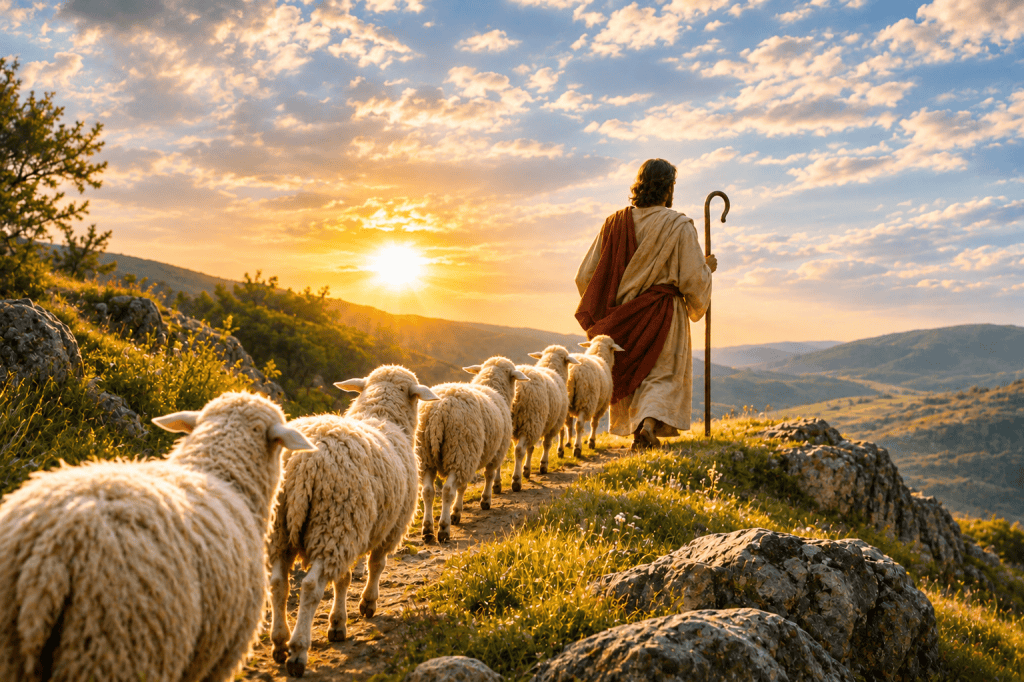
“My sheep hear my voice, and I know them, and they follow me.”
— John 10:27 (ESV)
His sheep hear His voice. He knows them. And they follow Him.
Throughout Scripture, God repeatedly uses the relationship between sheep and shepherds to describe His relationship with His people. It’s a picture worth considering, especially when thinking about all the voices competing for our attention.
There are fascinating videos online of sheep responding to their shepherd’s voice. If you haven’t seen them, search for “sheep know the shepherd’s voice.”
In some, people attempt to call a flock, but the sheep barely respond. Then their shepherd calls, and the flock begins moving toward him. They have learned to recognize a familiar voice.
But there is another story about sheep that offers a very different picture.
In 2005, approximately 1,500 sheep reportedly went over a cliff in eastern Turkey after following one another. Around 450 died.
We cannot know exactly what those animals perceived, but the incident offers a striking illustration of what can happen when a flock follows one another into danger.
Consider the contrast.
In one picture, sheep recognize their shepherd’s voice and respond.
In the other, sheep follow one another into danger.
And while neither story determines what Scripture means, together they raise a question worth considering.
Are we following the Good Shepherd, or are we sometimes simply following the other sheep?
When the voices around us are loud, convincing, familiar, and even religious, how do we distinguish the truth of our Shepherd from everything else competing for our attention?
And if we truly belong to Him, what does it mean to hear His voice and follow?
These aren’t questions we have to answer by relying on someone else’s opinion about God.
We can open His Word and examine what He has already revealed.
And perhaps, as we study, we’ll discover that the greatest challenge isn’t always recognizing when someone else is following the wrong voice.
Sometimes it’s recognizing when we are.
Join Us in Scripture
In our six-part Bible study, Whose Voice Are You Following?, we’ll explore why God calls us sheep, who Jesus reveals Himself to be as the Good Shepherd, how Scripture teaches us to recognize His truth, and what it means to actually follow Him.
Even If, Still
We’ll also examine the voices that can lead us astray—including those of people we trust, the crowd around us, and even our own understanding.
Begin with Part 1: Why Does God Call Us Sheep?
Don’t simply take my word for it.
Open your Bible. Examine the Scriptures. And discover what the Good Shepherd has said.
Even if the world is filled with competing voices, still, I will seek His truth, listen to the Good Shepherd, and follow Him.


Leave a Reply